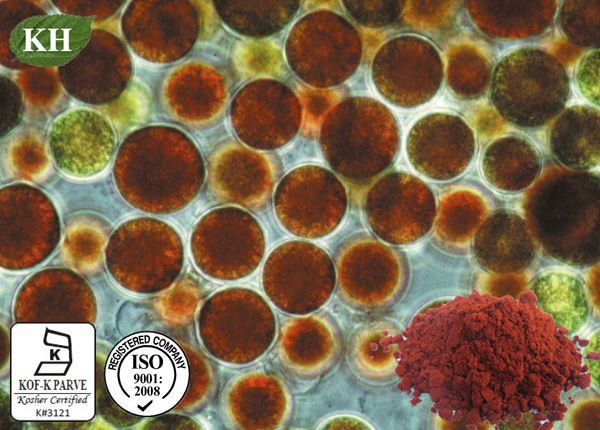

There are natural astaxanthin and synthetic astaxanthin, the natural one is mainly from Haematococcus pluvialis, Phaffiarhodozyma, or the waste parts of some seafood (crustacea), while the haematococcus pluvialis is the best source, also the popular source.
Haematococcus pluvialis is an edible algae, like the spirulina platensisi and chlorella vulgaris, so there is no worry on the suitability as dietary supplement for the astaxanthin.
The haematococcus pluvialis contains around 0.5% to 5% astaxanthin on dry basis, there is report upto 10%. So for the astaxanthin of 0.5%, 1%, to 5%, it is usual the dry powder of haematococcus pluvialis. When analyse the content, the algae shall be grounded until the monocellular’s shell broken, it is also easier to be digested if the shell is broken, but it is easier degraded or oxided for storage once the shell is broken.
For higher content of astaxanthin 5% above, the haematococcus pluvialis with high astaxanthi is choosed to be extracted, one of such solvents of edible oil (such as soya oil, sunflower seed oil), acetone, liquid CO2 (SCFE-CO2), and ethanol (grain alcohol) can be used, the ethanol is the best and popular choice at present, we KINGHERBS use ethanol for extraction. The extract is an oleoresin, the astaxantin is around 5% to 10%. The oleoresin can be changed into powder with microcrystalline cellulose, cyclodextrin as carriers, the content might be around 1% to 6%, they are so-called water soluble astaxanthin, or microcapsule astaxanthin. Even though it is also around 1%, but the microcapsuled one is much more expensive than the haematoccus pluvialis powder with the same content.