

What is Astaxanthin ?
What are the extraction sources of astaxanthin ?
1. Introduction:
Astaxanthin is a natural occurring keto carotenoid, widely found in nature, some algae, most crustaceans and frogs, plant leaves, flowers, fruits, and flamingo feathers Medium contains astaxanthin. Haematococcus pluvialis belongs to Chlorophata,which is the most abundant organism in foods containing astaxanthin in nature, its astaxanthin content reaches 5.0% of the dry weight, or even higher, and is known as the“concentrate” of natural astaxanthin.
According to the research of scientists, the ability of astaxanthin to scavenge free radicals is:
10 times of beta carotene.
200 times that of lutein.
550 times of vitamin
In addition, astaxanthin has a physiological property: It can directly bring antioxidant benefits to the brain and central nervous system through the Blood Brain Barrier (BBB).
2.Three production methods for astaxanthin currently are mainly chemical synthesis, natural extraction and biological fermentation.
(1) Chemical synthesis: The synthetic route of astaxanthin is more complicated seening from the chemical structure. Roche, a multinational pharmaceutical company, has synthetic astaxanthin, Chemically synthesized astaxanthin has obvious advantages over natural astaxanthin.
(2) Natural extraction: Astaxanthin can be extracted from natural products, such as, marine waste, algae and etc.
a. Algae extraction: The natural astaxanthin currently on the market is mainly derived from red algae, with a content of 1.5% ~ 3%, which can be produced and utilized on a large scale. “Astaxanthin” products can not be seen in the ingredient list of some astaxanthin products, but there will be "Haematococcus pluvialis Extract"indicated. The main component of this extract is astaxanthin.
b. Marine debris: extracted from shells such as crabs,shells, and shrimp, but they are not suitable for large-scale production, due to the low astaxanthin content in these marine debris.
(3) Biological fermentation: The focus of the research on the production of astaxanthin by microbial fermentation mainly lies in: changing the genetic characteristics of the strains through mutagenesis, protoplast fusion and DNA recombination techniques, so as to select high-yielding strains with heritability and easy to break.The production of astaxanthin by yeast fermentation has the advantages of fast speed, short fermentation cycle, no need for light, It is suitable for high-density cultivation in a fermentor, and has been favored by people.
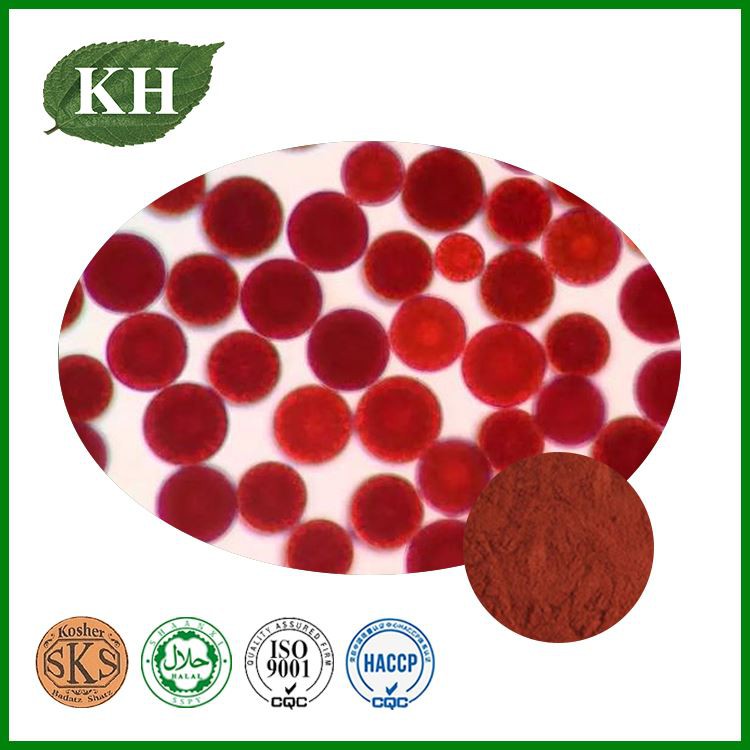
3.Kingherb’s Specifications of Astaxanthin
• Natural Astaxanthin Powder 1% /1.5% /2% /2.5%/ 3% /3.5% /5%
• CWS Water Dissolved Powder 2%
• Beadlets 2.5% (40-60Mesh)
• Oleoresin 5% 10%--Natural Astaxanthin