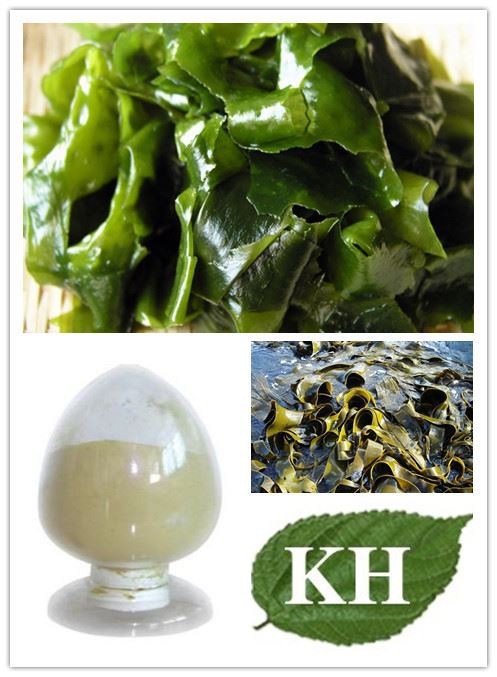

What is fucoidan?
In 1913, Professor Kylin, a Swedish scientist, discovered the slimy substance in kelp at Uppsala University. It was first named 'Fucoidin' and later 'Fucoidan'.
Fucoidan, is a kind of polysaccharides or fucose from brown algae with sulfate group. The content of fucoidan in brown algae is very low, about 0.1% in fresh kelp and 1% in dry kelp, it is a very valuable seaweed active substance.
When the environment gets bad, fucoidan is produced by brown algae to protect themselves, like the trans-resveratrol in plant produced when the plant in bad condition. When brown algae are exposed to direct sunlight, fucoidan prevents it from drying out and acts as a humectant. At the same time, it can prevent bacteria from invading the injured part and improve the antibacterial power and immunity.
Fucoidan mainly exists in brown algae, such as sea aggregates, undaria pinnatifida and kelp. It is good to take more brown algae as food, but the content is too small for treatment dosage, and heavy metals is an issue for some seaweed.
Fucoidan differs from beta-glucan and other polysaccharides from mushroom, its structure has sulphuric acid group, which is the important character of fucoidan. Because of the presence of sulfate group, it can specifically bind to Helicobacter pylori. Therefore, it is not too much to call fucozoite polysaccharide with sulphate group the essence of algae active substance.
The effects of fucoidan
A.Anti-helicobacter pylori and its Mechanism
1. Inhibit proliferation of Helicobacter pylori
In 2014, Yun-Bae Kim's research team at Chungbuk National University in South Korea published a study showing that fucozoite polysaccharide has a good antibacterial effect, and the concentration of 100ug/ mL fucozoite polysaccharide can completely inhibit the proliferation of Helicobacter pylori. (Lab Anim Res 2014:30(1),28-34.)
2. Prevent adherence and invasion of Helicobacter pylori
Sulphate group in fucoidan can bind to Helicobacter pylori and prevent it from adhering to gastric epithelial cells. At the same time, fucoidan can inhibit the production of urease and protect the acidic environment of the stomach.
3. Antioxidant, reduce toxin production
Fucoidan is a good antioxidant, can quickly remove oxygen free radicals, reduce the formation of harmful toxin chloramine.
4. Anti-inflammatory
Fucoidan can inhibit the activities of selective lectin, complement and heparinase, and reduce inflammation.
For more information, please refer to Immunology and Medical Microbiology, 1995,10,301-306; Journal of Nutritional Science and Vitaminology, 1999,45,325-336; Lab Anim Res 2015; 31(1),7-12.
B.Fucoidan can improve the intestinal function
C.Fucoidan can improve the chronic nephritis, chronic renal failure
D.Promote tumor rehabilitation, by relieve the side-effects from radiotherapy and chemotherapy, Induce tumor cell apoptosis, active the immune system to kill tumor cells, refer to Journal of Cancer Therapy, 2015,6,1020-1026
Please conduct your doctor before you take the fucoidan.