

Rosemary is a shrub of the Lamiaceae family, native to Europe and the Mediterranean coast of northern Africa. As far back as the Cao Wei period, it was introduced to China, and it has been recorded in the Compendium of Materia Medica. In 1981, the Chinese Academy of Sciences introduced it into China again, and large-scale planting began to appear in China. At present, rosemary is most economically cultivated in southern Europe, followed by China, India, the Mediterranean, North Africa and other places.
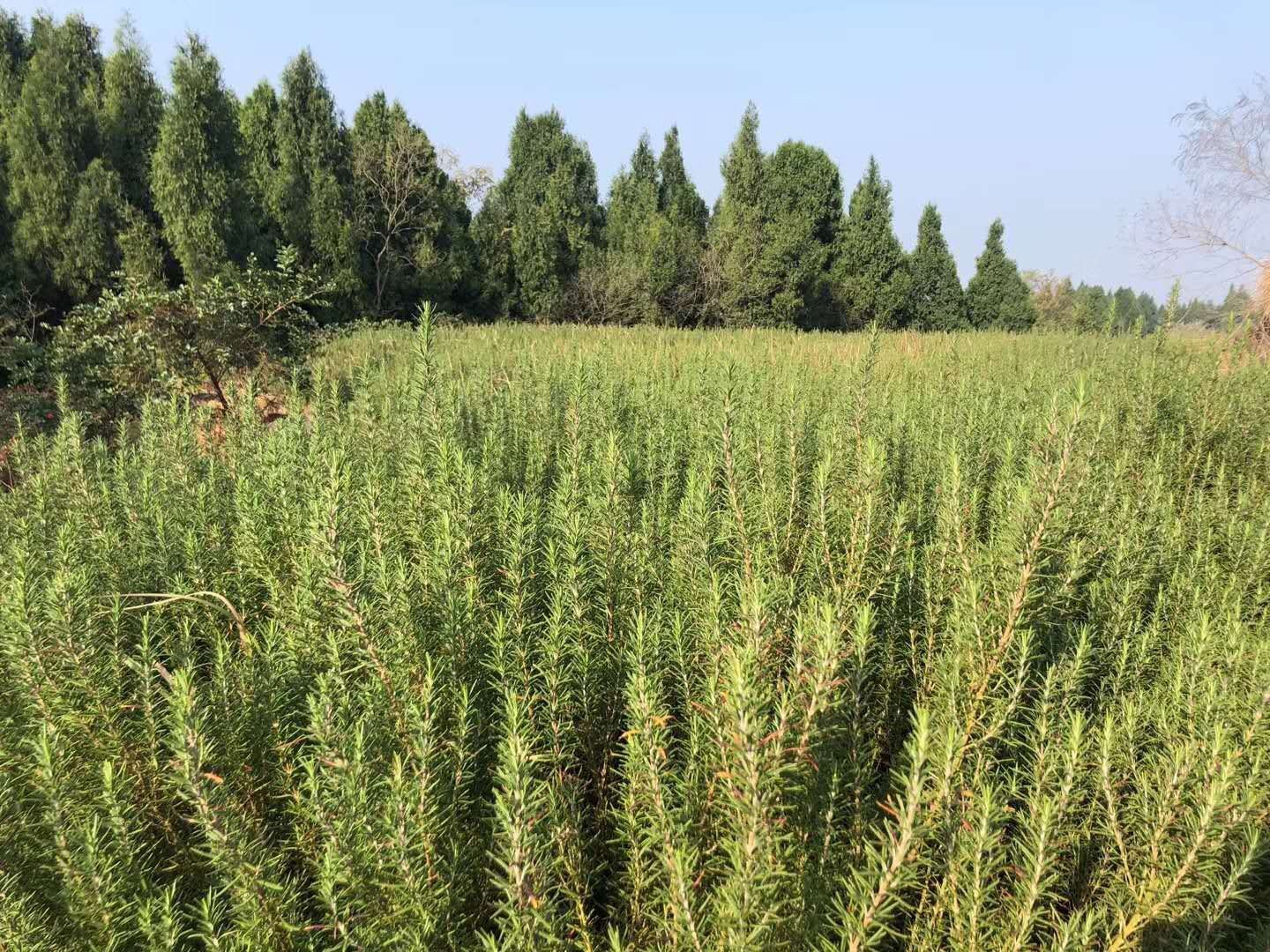
1. Rosemary essential oil
The extraction method of rosemary essential oil is that the rosemary leaves in the extraction tank are heated by the hot steam at the bottom, and after volatilization, they are carried by the water vapor to the top condenser, and after condensation, they are separated from oil and water.
Rosemary essential oil is currently divided into Rosemary CT cineole, Rosemary CT borneol and Rosemary CT verbenone. Corresponding to different essential oils, the sub-components in the product will be different, so there will be different applications in terms of efficacy. Now the color of rosemary essential oil in domestic is divided into colorless, light yellow and light orange red.
2. Rosmarinic Acid
A . Solubility problems of rosmarinic acid
We offen say that rosmarinic acid is a water-soluble antioxidant. In fact, this statement is not comprehensive. Observing the structural formula of rosmarinic acid, we can see that it contains a lipid-based structure. It should be said that rosmarinic acid is substance belonging to the larger polarity, soluble in water but not only soluble in water, it is also soluble in organic solvents ethyl acetate, n-propanol and other substances.
B. Ash content of Rosmarinic acid
The ash content of most plant extracts is less than 5%, but rosmarinic acid is difficult to achieve on this index, usually between 5% and 10%, or higher than 10%.
3. Carnosic acid + carnosol
The antioxidant process of carnosic acid is a process in which it is oxidized itself and protects the target substance from being oxidized.
The process is: carnosic acid-carnosol-Sage quinone-degradation.
That is tertiary antioxidant protection. Therefore, it can be understood that carnosol is an oxidation product of carnosic acid.
4. Ursolic acid
Ursolic acid solubility issues:
At 15°C, 1 ml of ethanol (99%) can dissolve 10 mg ursolic acid, and 1 ml of boiling ethanol can dissolve 45 mg ursolic acid. Ursolic acid can soluble in methanol, acetone, pyridine, insoluble in water and petroleum ether.
So in the cosmetic application of ursolic acid products, in addition to convert ursolic acid into sodium salt to make water-soluble convenient use, the direct use of ursolic acid in cosmetics is one of the more difficult issues.